
عبوة من 12 لاصقة لعلاج عرق النسا
وفر 18%! اشترِ عبوة من 12 لاصقة لعلاج عرق النسا بسعر 189 د.ل فقط في ليبيا. متوفر
🛒 تسوق الآن Libya Press
Three national election cycles since 2021 have failed to produce a unified government — with voter turnout dropping below 25% each time — revealing how foreign-backed political processes are losing legitimacy among Libyans. In January 2026, the Libyan Political Dialogue Forum (LPDF) extended its mandate by six months, but only 18% of registered voters participated — the lowest participation yet.
The United States and Turkey have intensified their International Action Group for Libya (IAP) coordination in 2026, holding seven high-level meetings — more than in any previous year. Meanwhile, the Government of National Unity, led by Abdulhamid Dbeibah, maintains a fragile hold on Tripoli, while Field Marshal Khalifa Haftar's Libyan National Army controls much of the east, supported by foreign forces. Libya's oil production remains capped at 1.2–1.4 million barrels per day — well below the 2 million-barrel target for 2030 — and the country has endured over 14 years of political fragmentation since the fall of Muammar Gaddafi.
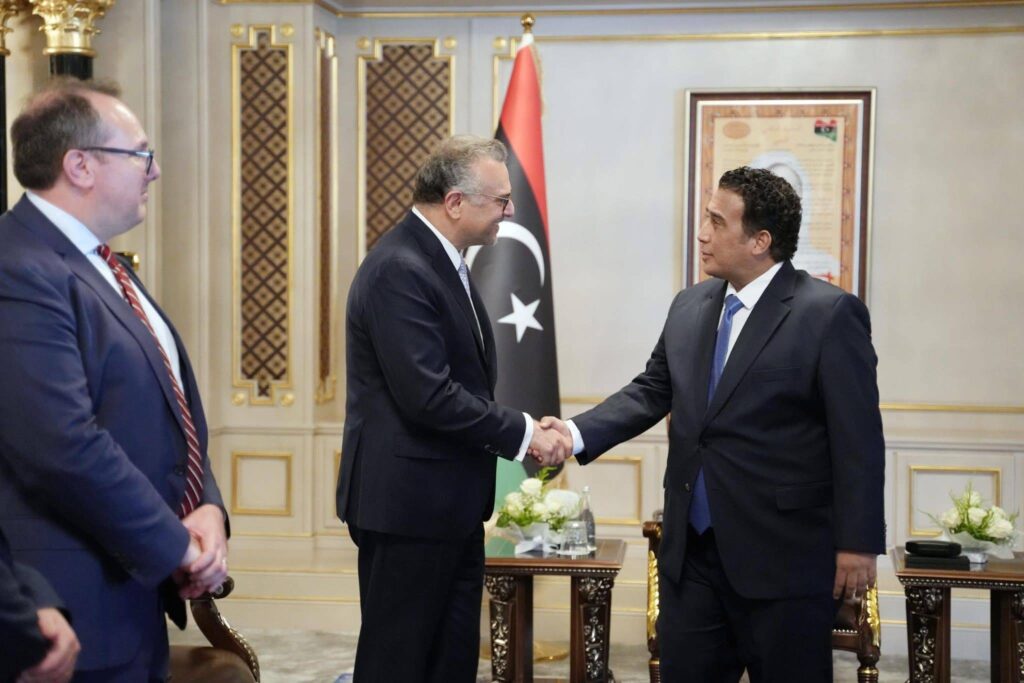
"Libya cannot be governed through exclusionary policies. Parallel engagement with both east and west is the only viable path forward," said Massad Boulos, US Special Envoy for Libya, in an interview with The Arab Weekly published in May 2026. Boulos, who has shuttled between Tripoli and Benghazi since late 2025, pushed for coordinated engagement with all major Libyan factions, including Italian Interior Minister Matteo Piantedosi, who met Saddam Haftar — commander of the Libyan National Army's ground forces — in June 2025. Meanwhile, Turkish intelligence chief Ibrahim Kalin visited Benghazi for direct talks with Haftar and senior military officials.
Libyans have endured over 14 years of political fragmentation since the fall of Muammar Gaddafi, with foreign interference perpetuating cycles of conflict. External actors backing rival governments and militias have blocked the establishment of unified sovereign institutions, delaying elections and limiting oil output. This fragmentation costs Libyans roughly $20 million per day in lost oil revenue — enough to rebuild hospitals, schools, and roads across the country.
Libya's unity is not a distant dream — it is an urgent economic and security necessity. With coordinated diplomatic pressure, transparent oil revenue distribution, and a Libyan-led electoral process, the country can finally move beyond the cycle of foreign interference and internal division. The United States and Turkey now have a shared interest in supporting a political outcome that Libyans themselves choose — not one imposed from abroad. This is the only path to lasting stability, prosperity, and regional peace.