
جهاز التدليك
وفر 39%! اشترِ جهاز التدليك بسعر 238.08 د.ل فقط في ليبيا. متوفر حالياً، الدفع عن
🛒 تسوق الآن Libya Press
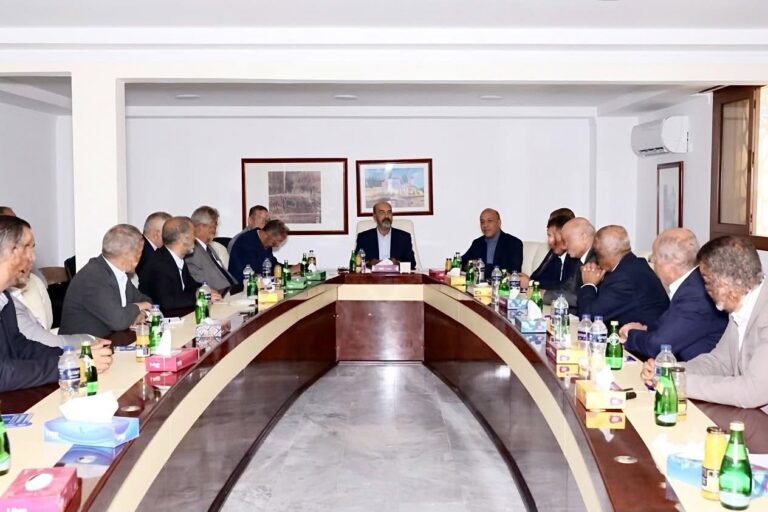
Moussa Al-Koni, Deputy Head of the Libyan Presidential Council, has stressed that preserving the unity of the Libyan Intelligence Service is a national necessity for safeguarding the country's security and stability. His remarks came during a meeting with department directors at the intelligence service headquarters in Tripoli on Sunday.
Al-Koni described any attempts to split the institution as "illegal measures" that violate the political agreement, warning that fragmentation of the intelligence apparatus would severely undermine Libya's ability to confront internal and external threats.
During the meeting at the service's main headquarters, Al-Koni received briefings from department directors on current operational mechanisms, challenges facing the institution, and the daily work carried out across various branches. The directors expressed their firm commitment to maintaining the unity of the institution and continuing their national duties despite difficult circumstances.
The Presidential Council member emphasized that the visit to the intelligence headquarters was part of his ongoing follow-up on the service's operations and his assessment of the challenges it faces during the current phase. He stressed the importance of the service continuing its role away from political and administrative conflicts.
Al-Koni strongly cautioned against actions that he said aim to divide the intelligence apparatus and scatter its administrative units. He described such moves as unilateral measures that would not deter intelligence personnel from fulfilling their mission in serving the nation and preserving its security and stability.
"The Libyan Intelligence Service must remain a unified national institution operating under the law," Al-Koni stated during the meeting. He highlighted that a cohesive intelligence apparatus is fundamental to addressing the security challenges Libya continues to face, including terrorism, smuggling networks, and foreign interference.
Al-Koni commended the efforts of all intelligence service members, praising their dedication to continuing their national duties despite the current difficult conditions and what he described as "harassment" they face. He affirmed the necessity of maintaining the unity of this national institution and ensuring it continues to carry out its missions in accordance with legal provisions.
The intelligence directors, in turn, reaffirmed their commitment to the institution's unity, stating that unilateral actions will not prevent them from continuing their work. They stressed that the Libyan Intelligence Service operates under a clear legal framework and serves all Libyans regardless of political affiliations.
The Libyan Intelligence Service has been at the center of political tensions in recent years, with competing factions seeking to gain influence over the institution. Since the 2011 uprising, Libya's security sector has experienced fragmentation, with multiple intelligence and security bodies operating under different authorities.
The Presidential Council has been working to unify state institutions under a single command structure. Al-Koni's statements reflect broader efforts to prevent institutional division and maintain the integrity of Libya's security apparatus amid ongoing political rivalries.
Security analysts note that a unified intelligence service is critical for Libya's fight against terrorist groups operating in the southern desert regions and along its porous borders. A divided apparatus would create vulnerabilities that could be exploited by extremist organizations and criminal networks.
The call for intelligence unity comes at a time when Libya is navigating a delicate political transition following the 2020 ceasefire agreement. A professional, unified intelligence service is seen as essential for gathering accurate threat assessments and providing decision-makers with reliable information to guide national security policy.
Al-Koni's emphasis on legal compliance and adherence to the political agreement signals an effort to ground the intelligence service's operations within the broader framework of Libya's transitional political process, protecting it from becoming a tool in factional power struggles.
The meeting delivered a clear message: the Libyan Intelligence Service must remain intact, professional, and focused on its core mission of protecting Libya's national security, regardless of the political headwinds surrounding it.
— Libya Press / News Desk