
قطاعة خضروات يدوية متعددة الوظائف 4 في 1
وفر 21%! اشترِ قطاعة خضروات يدوية متعددة الوظائف 4 في 1 بسعر 198 د.ل فقط في ليبي
🛒 تسوق الآن Libya Press
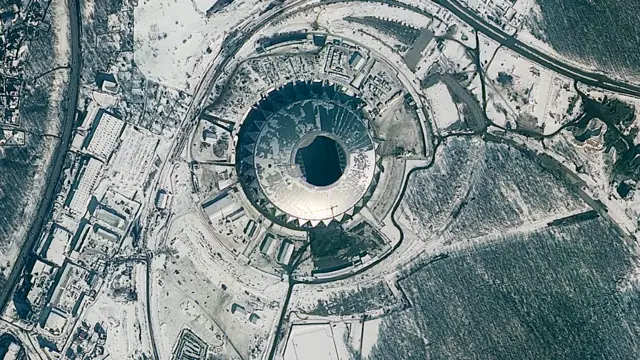
With the 2026 FIFA World Cup kicking off tomorrow, June 11, satellite imagery has revealed the dramatic transformations undergone by all 16 host stadiums across the United States, Mexico, and Canada. The images, obtained by Al Jazeera's Open Source Intelligence unit, show massive upgrades including expanded playing surfaces, replaced grass, and enlarged stands — all part of preparations to host the largest World Cup in history featuring 48 teams and 104 matches.
The total cost borne by the three host nations exceeds $12 billion, covering airport upgrades, transport infrastructure, logistics networks, and stadium renovations. The tournament marks the first World Cup hosted across three countries, with matches spread across 11 stadiums in the United States, 3 in Mexico, and 2 in Canada. The opening match takes place Thursday at Estadio México Ciudad — the legendary Estadio Azteca in Mexico City, renamed after FIFA took control of the venue.
Mexico City's Estadio Azteca, now officially Estadio México Ciudad, will host five matches including the opening game, three group stage fixtures, one Round of 32 match, and one Round of 16 match. Satellite images reveal a changed interior design, replaced grass, and expanded lower stands reaching approximately 90,000 seats. The stadium previously hosted the FIFA U-17 World Cup final. Two other Mexican venues — Estadio Akron and BBVA Monterrey — will each host four group stage matches. Mexico faces Korea Selatan at Estadio Akron on June 18.
Canada hosts matches at two stadiums: BC Place in Vancouver and BMO Field in Toronto, together staging 13 matches. BC Place, notable for its retractable roof that shields fans and players from sun, will host five group stage matches plus Round of 32 and Round of 16 fixtures. Canada plays at home on June 18 and June 24. BMO Field underwent a major expansion adding 17,756 seats, bringing total capacity to approximately 47,736, at a cost of $146 million to meet FIFA standards. It will host six matches including Canada's opening game.
The United States hosts 78 of the tournament's 104 matches. MetLife Stadium — rebranded as New York New Jersey Stadium — will stage the final on July 19. Satellite images show lower seats removed to expand the playing surface to FIFA specifications, along with replacement of artificial turf with natural grass. Dallas's AT&T Stadium is the largest US venue and hosts the most matches, including a high-profile clash between Jordan and Argentina. San Francisco's Levi's Stadium will host a historic all-Arab match between Jordan and Algeria, plus Jordan's tournament opener against Austria.
The 2026 World Cup features a record eight Arab national teams — the most in tournament history. Egypt, Morocco, Algeria, Tunisia, Iraq, Qatar, Saudi Arabia, and debutant Jordan have all qualified, bringing the total number of Arab nations to have participated in the World Cup since 1930 to ten. Jordan's participation is particularly historic, marking the country's first-ever World Cup appearance. Fans across the Arab world will have unprecedented representation to cheer for throughout the tournament.
As 48 teams prepare to compete across three nations in the most expansive World Cup ever staged, the satellite images offer a unique perspective on the scale of infrastructure behind the world's most-watched sporting event. From Mexico City's iconic Azteca to New Jersey's MetLife, these 16 venues represent billions of dollars in investment and years of preparation — all converging on tomorrow's opening whistle.
— LibyaPress / Sports Desk