
مزيل الرؤوس السوداء
وفر 25%! اشترِ مزيل الرؤوس السوداء بسعر 206.6 د.ل فقط في ليبيا. متوفر حالياً، ال
🛒 تسوق الآن Libya Press
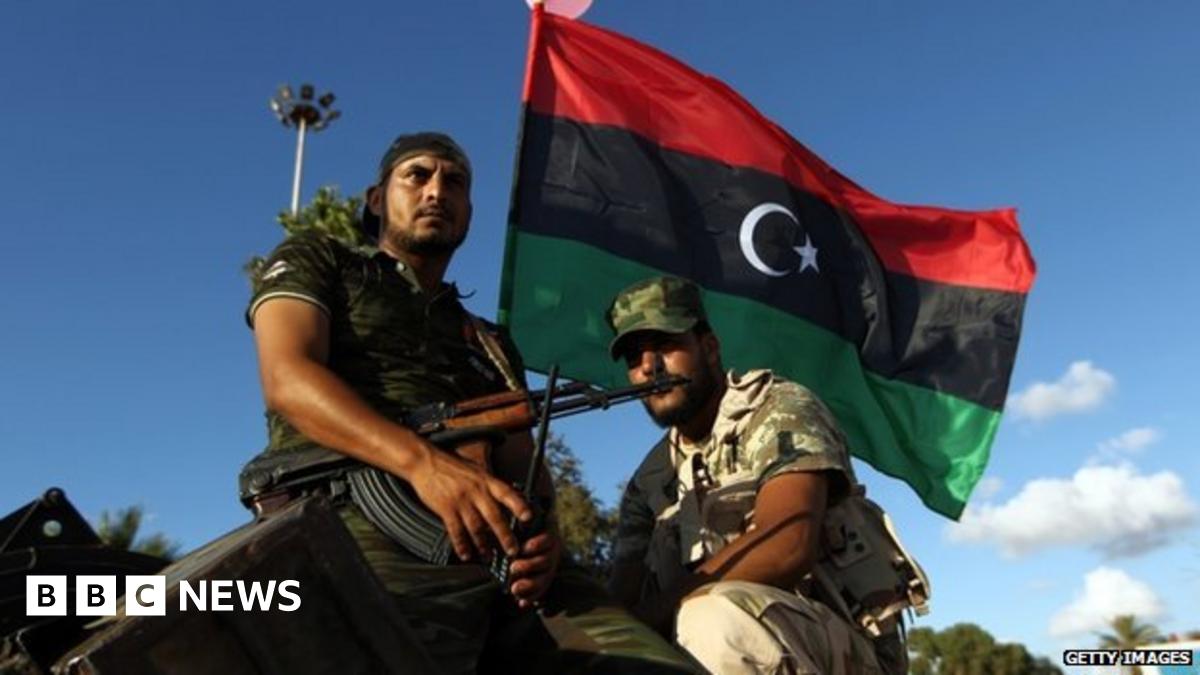
Libya remains trapped between two rival governments, militias, and foreign powers, turning division into a permanent state of instability. Following Muammar Gadhafi's demise in 2011, the country's civil wars culminated in a stalemate between its rival governments. Abdul Hamid Dbeibah's Tripoli-based Government of National Unity (GNU) controls western Libya via an acrimonious coalition of militias, whereas Field Marshal Khalifa Haftar's Libyan National Army (LNA) has de-facto control over the Tobruk-based Government of National Stability (GNS) that rules the east. Both authorities exploit this fractious arrangement to increase their bargaining power while outside actors struggle to balance between unifying Libya's fragmented institutions or exploiting the crisis for geopolitical gain.
Türkiye's intervention on behalf of the internationally recognized Government of National Accord (GNA) in January 2020 reversed Haftar's assault on Tripoli and the course of Libya's Second Civil War. It prevented Egypt and the United Arab Emirates (UAE) from gaining influence over Western Libya via the LNA, served as a field test for the Bayraktar TB2 unmanned aerial vehicle, and reinforced Turkish regional power projection (Ramani, 2020). After Egypt laid out its 'red lines', preventing a catastrophic LNA defeat and freezing the conflict, easing tensions between Türkiye and Egypt and the UAE contributed to the realization of the October 2020 ceasefire agreement and formation of the GNU in March 2021 (International Crisis Group, 2020).
Whilst Libya's ceasefire holds, its latent instability has reinforced security dynamics in the Mediterranean. A controversial maritime agreement between Türkiye and the GNA in 2019 claiming to link Türkiye's exclusive economic zone (EEZ) with eastern Libya's was accepted by Haftar in 2025 (Arab Weekly, 2025). The agreement clashes with the United Nations Convention on the Law of the Sea (to which Türkiye is a non-signatory) by overlapping the Egyptian and Greek EEZs, aggravating a dispute between Greece and Türkiye over maritime boundaries and subsea energy resources (Michalopoulos, 2026). NATO disunity over Libya has strained the alliance's credibility in the Mediterranean—most notably when France publicly accused Türkiye of violating a UN arms embargo in June 2020 (Ahmedzade, 2020).
Elevated oil prices and Europe's energy demand following the US-Iran War stands to benefit the GNS and GNU. Libya's National Oil Company (NOC) is based in Tripoli but relies on the goodwill of the LNA to keep eastern oilfields and terminals operating. Foreign exchange from energy sales props up Dbeibah's militia and patronage networks in the west as Haftar profits from diverting crude into illicit commercial channels, with both sides capable of disrupting one-another's revenues should Libya's balance of power shift (OilPrice, 2026). Their efforts to divert foreign exchange from the NOC and throttle its independence deprived Libya's hydrocarbon-dependent budget of $9 billion in 2025 alone (UNSC, 2026).
Gradual progress has been made in thawing Libya's political process through UN and below-the-radar Emirati and Turkish engagement (Eaton, 2024). Both governments participate in electoral discussions via the UN-endorsed 4+4 dialogue, though militias responsible for the 2021 election delay could derail talks (UN, 2026). US Senior Advisor Massad Boulos brokered Libya's first unified budget since 2013 in April, setting an electoral roadmap for February 2027 (Al Jazeera, 2026). However, this personalized diplomacy depends on Boulos' standing and balancing GNS-GNU interests, prioritizing stability over institutional reform (Africa Confidential, 22026; Harchaoui and Wehrey, 2026).
Libya fuels global instability, with Gadhafi once aspiring to continental leadership while now serving as a springboard for Italian, Russian, Türkiye, and UAE power projection into Africa. African stakeholders fear LNA-held areas, where weapons flow to Russia's Africa Corps, Sudan's RSF, and Sahelian militants (Africa Intelligence, 2026). The 2023 Storm Daniel disaster exposed factional squabbles between GNU and GNS forces (IISS, 2024). Reconstruction awaits breaking Dbeibah and Haftar's stalemate, though US-led diplomacy and Chinese investments offer potential mediatory roles (Abdullah, 2024; Shahid and Bukhari, 2026). Pakistan has also begun facilitating GNS-GNU dialogue with Qatari, Turkish and US support (Shahid and Bukhari, 2026).
— Libya Press / News Desk