
قالب يدوي لتغليف الزلابية
وفر 25%! اشترِ قالب يدوي لتغليف الزلابية بسعر 180 د.ل فقط في ليبيا. متوفر حالياً
🛒 تسوق الآن Libya Press
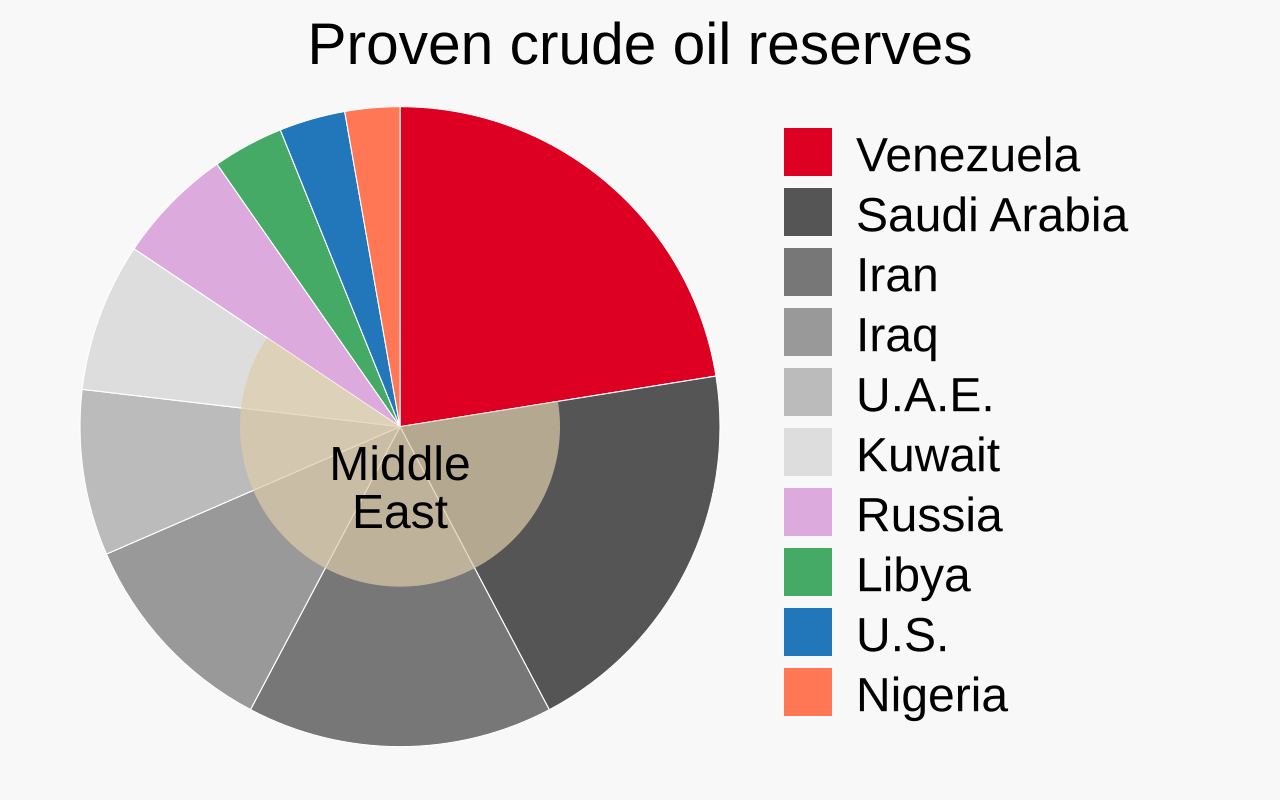
Venezuela holds the world's largest proven crude oil reserves at 303 billion barrels, commanding 17.17% of global reserves. Saudi Arabia follows with 267 billion barrels, while Iran ranks third with 209 billion barrels. Together, the top 10 nations control approximately 85% of the world's 1.75 trillion barrels of proven reserves, according to Worldometer data from June 2026.
The ongoing conflict between the United States and Iran has pushed oil markets back into deep uncertainty in June 2026. The Strait of Hormuz, located along Iran's southern coast, handles approximately 20% of global oil trade — making it the world's most critical energy chokepoint. Any escalation of hostilities between Washington and Tehran threatens to disrupt supply chains worldwide. Iran's strategic location, combined with its 209 billion barrels of proven reserves (11.82% of global total), gives it outsized influence despite years of Western sanctions. As News18 reported, Iran has strengthened energy cooperation with Russia and China, positioning itself as a counterweight to Western pressure.
Here are the world's largest proven crude oil reserves as of 2025-2026, according to Worldometer and IEA data:
Saudi Arabia's upstream oil and gas investment reached $40 billion in 2025, nearly 15% more than in 2015, according to the International Energy Agency. The kingdom plays a pivotal role in stabilizing global oil supplies as the de facto leader of OPEC. Saudi Aramco has signaled plans to increase production capacity to maintain market share amid rising competition from US shale producers.
Libya holds an estimated 48 billion barrels of proven oil reserves — the largest in Africa and 10th globally. However, the country's oil production remains vulnerable to ongoing political instability, militia conflicts, and infrastructure degradation. Despite sitting on enormous reserves, Libya's daily production has fluctuated between 1.1 and 1.3 million barrels per day, well below its pre-2011 capacity. For Libyan citizens, the gap between the nation's resource wealth and actual economic output represents both a source of frustration and a call for transparent governance. Regional powers and international oil companies continue competing for access to Libya's lucrative oil fields, particularly in the Sirte Basin and Murzuq regions.
The convergence of Iran-US tensions, OPEC+ production decisions, and accelerating renewable energy transitions is creating unprecedented volatility in oil markets. West Texas Intermediate (WTI) crude prices have fluctuated sharply in 2026, driven by supply concerns in the Persian Gulf and shifting demand patterns in Asia. The IEA's Oil Market Report for March 2026 noted that global oil demand reached approximately 104 million barrels per day, with emerging markets in Asia and Africa accounting for the majority of growth. Meanwhile, Russia continues redirecting exports toward China and India, fundamentally reshaping global energy trade routes. For investors and policymakers alike, understanding which nations control these reserves is essential for navigating the energy landscape of 2026 and beyond.
The global energy landscape is at a crossroads. While crude oil remains the backbone of transportation, petrochemicals, and industrial operations, accelerating investments in renewable energy are beginning to reshape long-term demand projections. Nations like the UAE and Saudi Arabia are leading diversification efforts through Vision 2030 and national transformation programs, reducing their dependence on oil revenue. For Libya, the path forward requires political stability, infrastructure investment, and transparent resource management to unlock its full potential as Africa's top oil reserve holder. The world is watching — and the decisions made in 2026 will shape energy markets for generations.
— LibyaPress / Economy Desk