
إزالة شعر الحيوانات الأليفة
وفر 19%! اشترِ إزالة شعر الحيوانات الأليفة بسعر 195 د.ل فقط في ليبيا. متوفر حالي
🛒 تسوق الآن Libya Press
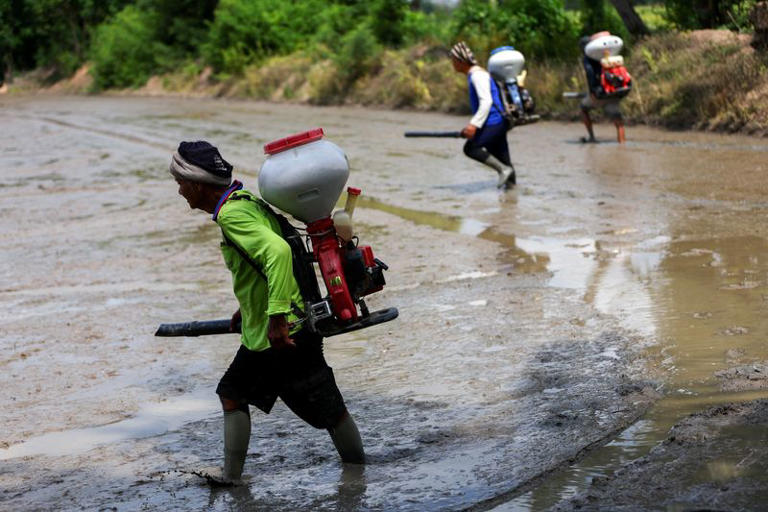
Thailand's farm debt crisis has reached a critical tipping point, with rising fuel and fertiliser costs linked to the Iran conflict pushing millions of rural borrowers deeper into financial distress. Retail diesel prices in Thailand surged by more than 60 per cent at their peak, while fertiliser costs have climbed over 30 per cent -- a devastating combination for the country's 4.6 million rice farming households already struggling with export prices at an 18-year low. For farmers like 64-year-old Phayong Saengthong from Ayutthaya, the math no longer works: after decades of farming, he owes more than one million baht ($30,600) and recently absorbed an additional 200,000 baht in losses from his latest harvest.
Prime Minister Anutin Charnvirakul won a landslide election victory in February on the strength of rural support, but his administration is already facing a severe backlash. A Suan Dusit University poll conducted in May found that 57 per cent of respondents had little or no expectation of government performance -- a dramatic reversal from March, when 68 per cent expressed optimism. Finance Minister Ekniti Nitithanprapas has openly described the situation as a "cost-of-living crisis," and nearly 78 per cent of polled citizens are demanding urgent action on rising living costs. The government has rolled out a 176-billion-baht (US$7 billion) consumer subsidy programme as part of a wider 400-billion-baht emergency borrowing decree, but those measures face legal challenges from opposition parties and farmers say the support is far too little.
Chaon Taiupok, a 69-year-old rice farmer in Ayutthaya province about 80 km north of Bangkok, farms 72 rai (11.5 hectares) and owes roughly half a million baht to the state lender. "Once they won and formed the government, they disappeared," Chaon said of politicians who courted his vote ahead of the February election. With costs so high and rice prices so low, he says there is nothing left but debt. Phayong Saengthong echoes that despair: "The debt is overwhelming. If suppliers stop giving me goods on credit, I may have to stop growing rice." Pramote Charoensilp, president of the Thai Agriculturists Association, plans to push for stronger government support at a national rice policy board meeting on Thursday, warning that the 1,000-baht-per-rai subsidy is nowhere near enough to cover rising expenses.
The Thai farm debt crisis has direct implications for import-dependent nations like Libya, which imported $73.3 million of rice in 2024. As one of the world's top rice exporters alongside India and Vietnam, Thailand's sustained agricultural distress could tighten global supply and drive prices higher. For North African nations managing food security and currency pressures, a prolonged downturn raises the cost of a staple that feeds millions.
The path forward depends on stabilising energy prices, government intervention on input costs, and rice export prices recovering toward the 10,000-baht threshold. Ngamprawan Ehsomnuk of Suan Dusit University frames it bluntly: "The pressure is not just economic -- it's a crisis of confidence." For now, millions of farmers wait for a lifeline that has yet to arrive.
-- LibyaPress / Economy Desk