
مروحة كهربائية توربينية لاسلكية
وفر 22%! اشترِ مروحة كهربائية توربينية لاسلكية بسعر 289 د.ل فقط في ليبيا. متوفر
🛒 تسوق الآن Libya Press
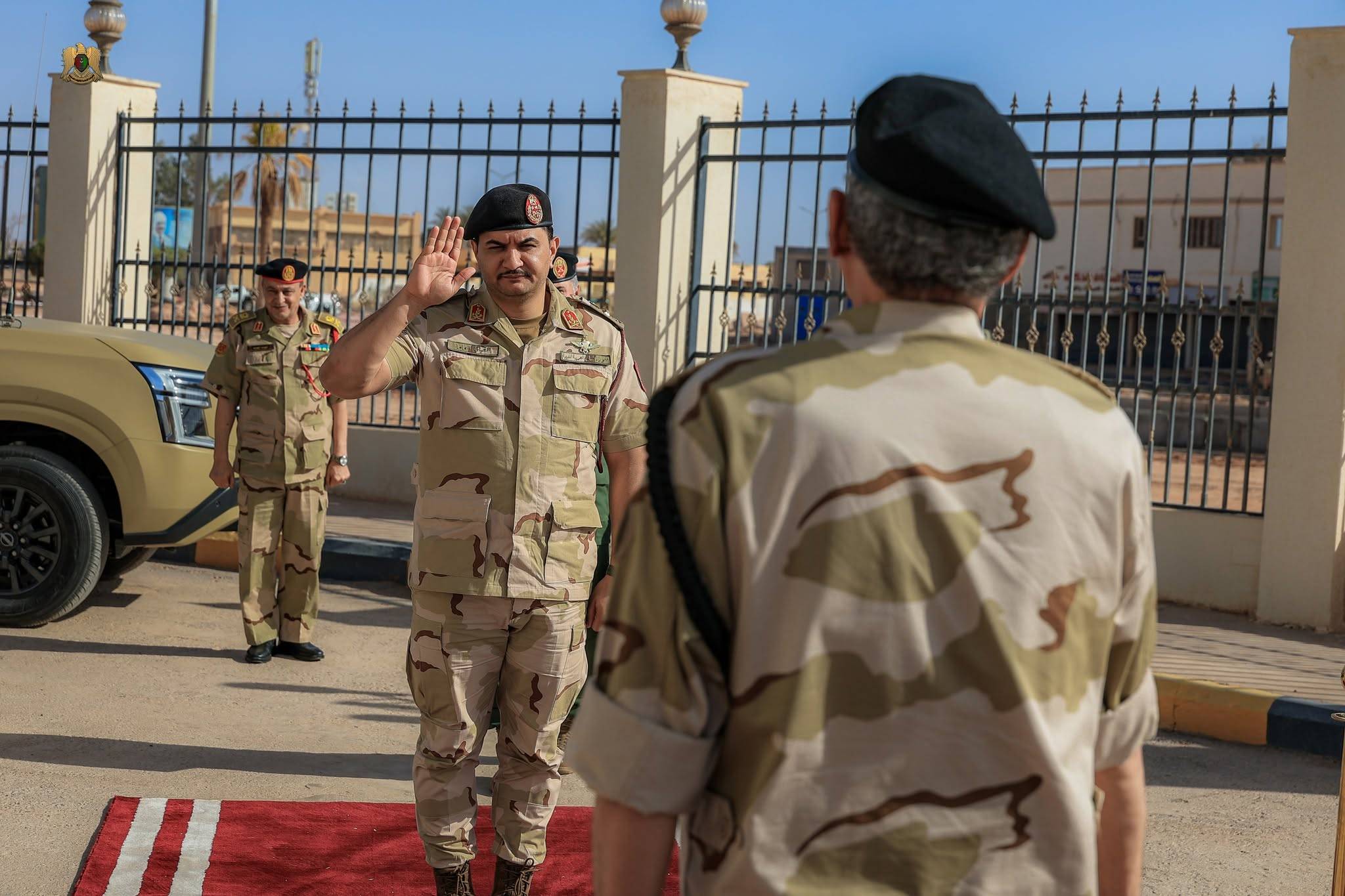
Lieutenant General Saddam Khalifa Haftar, Deputy Commander-in-Chief of the Libyan National Army (LNA), has pledged decisive action against any attempts to destabilize southern Libya during a critical visit to the city of Sebha on June 12, 2026. The visit underscores the growing strategic importance of the Fezzan region, where security challenges including cross-border smuggling, illegal migration, and militia activity continue to threaten national stability.
Haftar met with Major General Al-Mabrouk Sahban, Commander of the Sebha Military Zone, at the General Command headquarters in Benghazi, where both leaders conducted a comprehensive review of deployed military units and their operational readiness across southern Libya. The discussions covered the protection of strategic areas, the maintenance of internal security, and ongoing operations aimed at consolidating state authority in the vast desert region that borders multiple international frontiers.
Haftar commended frontline forces for maintaining security under what he described as "difficult operational conditions" while reaffirming the General Command's commitment to providing full logistical, technical, and operational support. The LNA leadership views southern Libya as critical to the country's broader security architecture, particularly given the region's role as a corridor for transnational threats.
"Maintaining stability in the south remains a central component of broader security plans aimed at strengthening state authority and preserving national cohesion," military officials stated following the meetings. The region's 600,000 square kilometers of desert terrain, combined with its porosity to international borders, makes it one of the most operationally demanding theaters for Libyan security forces.
Haftar specifically praised the efforts of military units stationed in Sabha and surrounding areas, acknowledging that personnel deployed in the south often operate far from supply lines with limited infrastructure. He stressed that the General Command would prioritize resourcing for southern deployments, recognizing that sustained military presence is essential to preventing a security vacuum.
The security of southern Libya affects the entire country. Instability in the Fezzan reverberates northward through disrupted trade routes, increased arms trafficking, and the empowerment of armed groups that challenge state legitimacy. For ordinary Libyans, whether in Tripoli, Benghazi, or Misrata, the south represents both a security buffer and the nation's most vulnerable frontier.
The Tripoli-based Government of National Unity has historically struggled to project authority into the Fezzan, leaving a governance gap that the LNA has sought to fill. This dynamic has created tensions between competing visions for Libya's south, with local communities caught between rival armed factions and competing political claims.
International observers, including United Nations envoy Abdoulaye Bathily, have consistently emphasized that lasting Libyan peace requires addressing the south's security and governance challenges. The region's population of approximately 500,000 civilians deserves the same basic security enjoyed in coastal cities.
Haftar's visit and his public commitment to southern security signal that the LNA intends to maintain its momentum in the Fezzan. The coming weeks will test whether the renewed pledges translate into tangible improvements on the ground, or whether the cycle of instability that has plagued southern Libya for over a decade continues.
For Libyans watching from across the country, the south's security trajectory is not a distant concern — it is a national priority that shapes the future of governance, borders, and daily life. A stable Fezzan means a stronger Libya for everyone.
— LibyaPress / Security Desk