
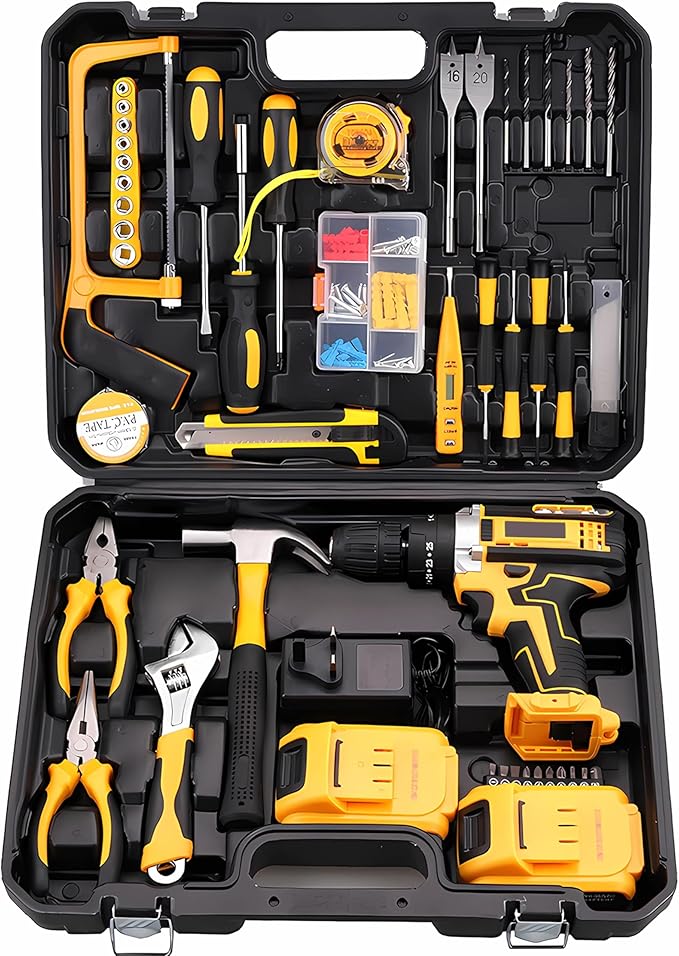
طقم أدوات كهربائية بقوة 48 فولت
وفر 23%! اشترِ طقم أدوات كهربائية بقوة 48 فولت بسعر 549 د.ل فقط في ليبيا. متوفر
🛒 تسوق الآن Libya Press
Michael P. Duffey, the Under Secretary of War for Acquisition and Sustainment, took his reform message directly to the American public this week, speaking before the Daily Journal Editorial Board in Tupelo, Mississippi on Friday. The appearance comes at a pivotal moment for the Pentagon's acquisition enterprise, which oversees roughly $300 billion in annual contracts and employs approximately 190,000 civilian and military professionals.
Duffey, who was sworn into his role on June 5, 2025 after Senate confirmation, is the senior official responsible for executing one of the most ambitious defense procurement overhauls in decades. His portfolio spans acquisition policy, logistics, sustainment, contract administration, nuclear deterrence, and the defense industrial base — making him one of the most consequential figures in U.S. national security infrastructure.
Before joining the Department of War, Duffey served as Program Associate Director for National Security at the Office of Management and Budget, where he oversaw the entire $1 trillion-plus U.S. national security budget. He helped publish a 30-year shipbuilding strategy and led funding for nuclear modernization and the Space Force.
His experience across both budget and technical domains gives him a rare dual perspective on how defense dollars translate into battlefield capability.
The acquisition transformation Duffey is leading rests on several pillars that mark a sharp departure from traditional Pentagon procurement:
In his public remarks, Duffey has framed the reform philosophy with characteristic precision. "We're continually going to be dependent on the judgment of program leaders who are executing these programs to understand where does the need for speed balance with the risk that we would undertake for the cost and or performance of the system," he told lawmakers during his confirmation process.
This balancing act defines the central tension of his role. The GAO has kept DOD weapon systems acquisition on its High-Risk List since 1990.
For Libya and the broader North Atlantic alliance, U.S. defense acquisition reform carries direct strategic implications. A more agile and productive American defense industrial base means faster delivery of security assistance, intelligence-sharing platforms, and stabilization capabilities to partner nations across the Mediterranean and North Africa.
Libya's fragmented security landscape depends heavily on Western allies' capacity to respond to emerging threats. Duffey's push could determine how rapidly the U.S. can support stabilization and counterterrorism across the Sahel and Maghreb.
The expansion of nontraditional defense vendors could also open technology partnership opportunities for regional allies, from drone surveillance to maritime monitoring along Libya's Mediterranean coast.
Duffey's impact has not gone unnoticed in Washington. Executive Mosaic named him a 2026 Wash100 recipient for transforming the acquisition enterprise and reinforcing the resilience of the U.S. defense industrial base. CEO Jim Garrettson called "a strong champion for building a more resilient industrial base and embracing faster, more flexible contracting approaches."
As the Pentagon continues implementing Secretary Hegseth's sweeping acquisition overhaul — with its emphasis on speed, accountability, and competition — all eyes remain on Duffey to deliver results. For a world watching great-power competition intensify, the success or failure of these reforms will shape the balance of power for decades to come.
— LibyaPress / Tech Desk