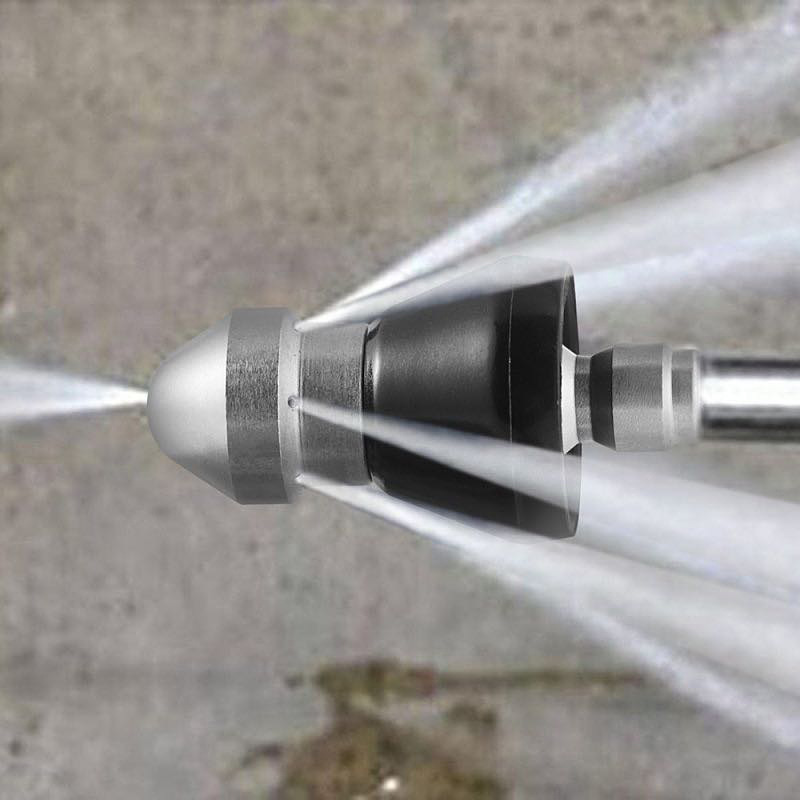
أداة تنظيف الصرف
وفر 22%! اشترِ أداة تنظيف الصرف بسعر 219 د.ل فقط في ليبيا. متوفر حالياً، الدفع ع
🛒 تسوق الآن Libya Press
On June 8, 2026, nine Libyan municipalities from the country's central corridor gathered in Bani Walid and declared the formation of a new "Central Region Province" (CRP) — a fourth administrative region designed to sit alongside Libya's three historic provinces of Tripolitania, Fezzan, and Cyrenaica. The announcement has ignited fierce protests, reopened decades-old fault lines over federalism, and forced a national conversation about how Libya should govern itself.
The municipalities involved — Misrata, Tarhouna, Bani Walid, Khoms, Zliten, Emsslata, El-Mardoum, Qasr Khiyar, and Tenenai — framed the initiative as a push for "good governance and equal development opportunity." Their joint statement emphasized "historic administrative and social ties" binding the central region's cities and towns, arguing that administrative decentralization would bring geographic justice to communities long neglected by Tripoli-centric governance.
Despite the developmental rhetoric, backlash was swift. By the evening of June 8, protesters in Bani Walid and Tarhouna had blockaded municipal council buildings, erected sand barriers, and welded shut main entrances. Many demonstrators belonged to the powerful Werfella tribe, which rejected its inclusion in the new province. The message was clear: residents of these towns want a say in decisions that reshape their political identity.
The Libya Security Monitor reported that protests escalated rapidly, with anti-centralization demonstrators forcibly shutting down local municipal headquarters. For many in Bani Walid and Tarhouna, the CRP announcement felt less like grassroots decentralization and more like a top-down administrative partition imposed without public consultation.
The CRP founding statement outlined several key principles:
Libya's relationship with federalism stretches back decades. The country's three historic regions — Tripolitania in the northwest, Fezzan in the southwest, and Cyrenaica in the east — predate independence in 1951. When nine municipalities now propose a fourth region, they touch a raw nerve: who draws Libya's internal borders, and who benefits?
As Germany's Stiftung Wissenschaft und Politik (SWP) noted in a 2013 research paper, proposals for regional representation in Libya consistently face the challenge of defining boundaries that balance power among competing local identities. The 60-member Committee framework suggested equal twenty-member representation for each of Libya's three historic regions — but adding a fourth fundamentally reshapes that equation.
This is not merely a bureaucratic reshuffle. The central region question cuts to the heart of Libya's stability. After more than a decade of fractured governance, rival governments in Tripoli and Benghazi, and stalled elections, any attempt to redraw administrative boundaries carries seismic political implications.
Since 2025, Libya's political scene has seen competing initiatives from Prime Minister Abdul Hamid Dbeibah's Government of National Unity, the eastern House of Representatives under Speaker Aqila Saleh, the High Council of State, and the Presidential Council led by Mohamed Menfi. United Nations Special Representative Abdoulaye Bathily pushed for elections by mid-2025 before his resignation. Against this backdrop, the CRP announcement adds yet another variable to an already volatile equation.
For ordinary Libyans, the central region debate is about something very practical: who controls local resources, who gets funding for infrastructure, and whose voice is heard when decisions are made about their cities.
The coming weeks will determine whether the Central Region Province becomes a genuine framework for local empowerment or another flashpoint in Libya's ongoing struggle over governance. The protests in Bani Walid and Tarhouna show that legitimacy — not declarations — will decide the outcome.
Libya's path forward requires inclusive dialogue that respects both the push for decentralization and the consent of communities directly affected. One thing is certain: the conversation about how Libya divides itself is far from over.
— LibyaPress / Politics Desk